Artificial Intelligence and Creative Design
Artificial Intelligence and Creative Design
Experiencing Midjourney
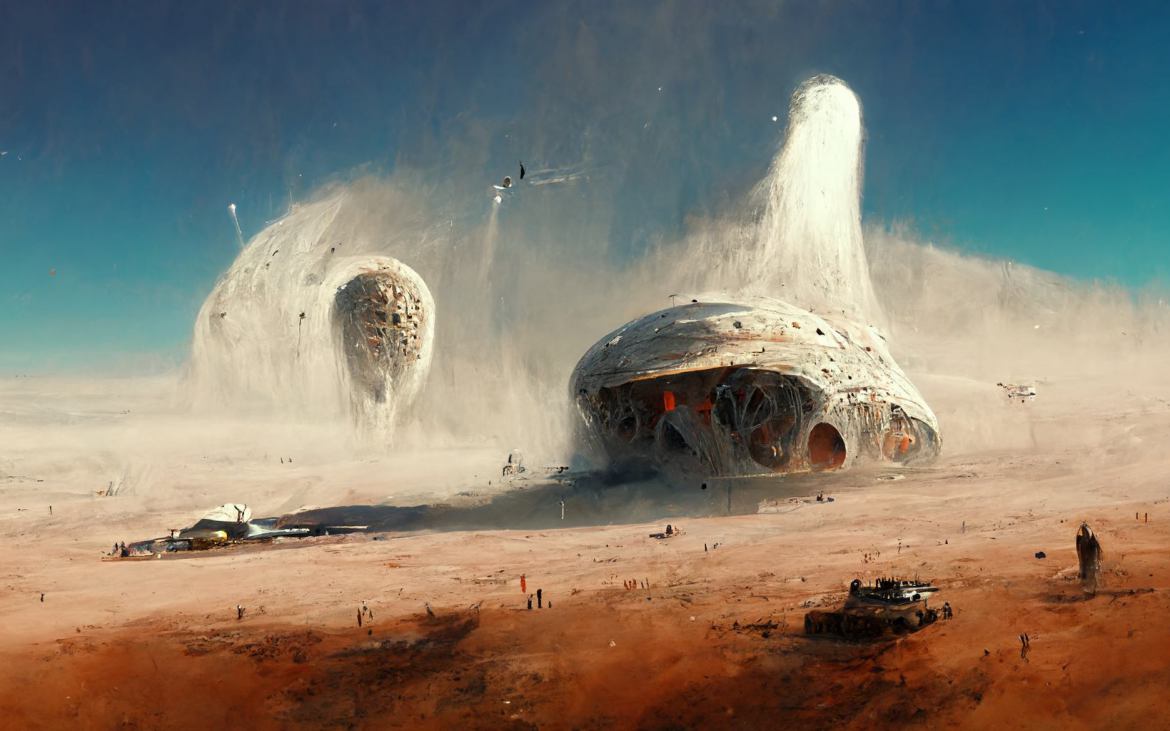
Pic 1. Art-making AI on the Rise
Gabrielle Edenia
VCD 013201900023
In this modern technological era, brand new breakthroughs arise on a frequent basis, and Artificial Intelligence is no exception. AI is all around us. AI can, in fact, perform many complex tasks far quicker than humans. This can mean visualizing a human eye, or a bird, or a train on another planet, or even other fantasy of one’s mind can imagine faster than we ever could. It’s easy to see how that could be useful. With technology continuing to move on at a swift pace, there's been plenty of recent discussion as to whether digital renders can truly ever replace product photography. It's simple to understand how that may be beneficial. With technology progressing at such a rapid rate, there has been much recent debate over whether digital renderings can ever really replace product photography.
The unique feature of AI-generated images is that they bring an entirely new notion in visual creation: synthetic media, often known as generating image. Synthetic images are those made by intelligent text-to-image production software rather than a camera or a manned digital illustration/painting application. Instead of capturing or painting an image, you introduce a brief description of a vision, and AI creates a visual depiction of that vision from scratch based on the written prompt. As a future designer, here’s my two cents on what I think about this trending innovation.
I spent some time earlier today joining the bandwagon by experimenting with an Artificial Intelligence given by the Discord platform. The trend has been going around recently, whether people may enter their data of photographs that will later be assembled to be one photo particularly generated by the system, or whether there is a system that employs a difficult process known as "diffusion" to convert texts into bespoke images. Users send a message to Midjourney and the bot responds with a picture seconds later. This feature is offered by Midjourney on Discord.

Pic 2. First attempt in Midjourney
There is only one easy guideline that individuals must follow in order to get this type of result; all that is necessary is a description of how you want it to turn out. The more specific you can be, the better the outcome will be. I simply described the first sample as “cartoon teenage girl, bringing a book of mantra, splash water around the character, pretty visual, pink hair, wearing blue dress, big pink ribbon on top of her head, smiling, walking at the beach, pastel colors, 2d animation”.

Pic 3. Second attempt in Midjourney
This is my second try at using the new Artificial Intelligence filter. Surprisingly, this image was merely explained with a few and brief captions, “video game character, pretty visual, using fire arrow to attack, aiming at a ice and frosty surface of an item, bringing a red bunny plushie”.
The filter does not always perform precisely as expected; the results may vary depending on the system's data and internal settings. And that's the part that most people enjoy when they invest and waste their time trying out the filter multiple times.
AI-generated art, such as Midjourney, is gaining acceptance in the stock media market as a completely new genre of artwork, bringing new issues and exposing openings for new software solutions to solve. Aside from the accuracy of this specific technology, it is apparent that as AI people photographs become more prevalent, it will be critical to be able to distinguish them from actual people photos in certain scenarios.
Some critics argue that what differentiates the current generation of A.I. tools is not merely their ability to produce magnificent works of art with minimum effort. It's how they operate. Midjourney is created by collecting millions of photos from the open web and teaching computers to detect patterns and correlations in those images in order to generate new ones in the same style. As a result, artists who submit their creations to the internet may unintentionally be assisting in the training of their algorithmic competition.
In the future, I believe that technologists will need to evaluate both the benefits and drawbacks of their technology and develop prevention techniques before predictable damages happen. This current trend in synthetic media, which appears to be limited only by your imagination, has thrilled many, inspired others, and terrified some.
Comments
Post a Comment